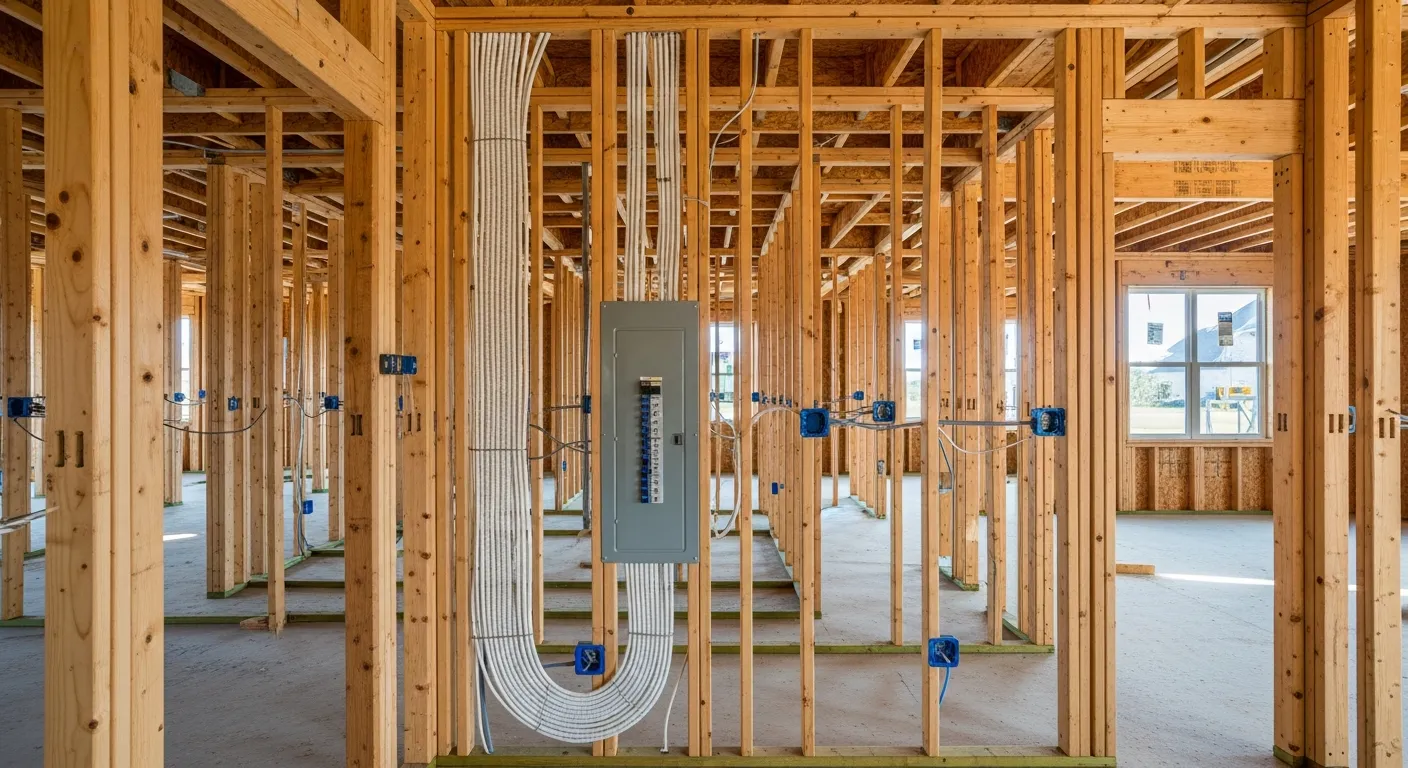
Electrical rough-in is the phase that determines whether everything that follows goes smoothly. It is the wiring, boxes, panels, and circuits installed after framing and before insulation and drywall — the bones of the electrical system. Done right, it is invisible. Done wrong, it causes failed inspections, finish delays, and callbacks that cost builders time and money.
Z&J performs rough-in as a subcontractor for custom-home builders, remodelers, and commercial general contractors across DFW. We bring layout discipline, clean workmanship, and a code-first mindset so the rough passes inspection on the first walk and the trim-out has nothing to fight.
What rough-in covers
A complete rough-in includes the service and panel, home-run and branch-circuit wiring, device and fixture boxes, switch legs, dedicated circuits for appliances and equipment, low-voltage and data provisions where specified, and all the nail plates, supports, and fire-stopping that code requires. We coordinate the lighting layout and box heights against the plans so the finish lands exactly where the designer drew it.
We set boxes plumb and to consistent heights, route home runs cleanly, label circuits, and leave the panel organized — the kind of rough that an inspector and the next trade both appreciate.
Coordination with the build
Rough-in lives or dies on coordination. We sequence our work with framing, plumbing, and HVAC so runs don’t collide, and we confirm fixture and device locations with the builder and homeowner before we drill a single hole. Catching a misplaced kitchen island or a moved vanity at rough is free; catching it at trim is expensive.
On every project we work to the reflected-ceiling and electrical plans, flag conflicts early, and keep the GC informed so the schedule holds.
Code compliance and inspection
We wire to the current NEC and the local jurisdiction’s amendments, with attention to the details inspectors check: box fill, conductor sizing, AFCI/GFCI protection, working clearances, supports, and fire-stopping. Our goal is always a first-pass inspection, because a failed rough delays insulation, drywall, and every trade behind us.
We document and label our work so the system is serviceable for the life of the building, and so the trim-out crew — often us — can move fast and clean.
Our process
Plan & layout
We review electrical and ceiling plans, confirm device and fixture locations, and mark the build before drilling.
Wire & set
We pull home runs and branch circuits, set boxes and panels, and install supports, plates, and fire-stopping to code.
Inspection
We walk the rough, label and document the system, and present it for a first-pass inspection.
Frequently asked questions
Do you work as a subcontractor for builders and GCs?
Yes — subcontracting rough-in and trim-out for custom-home builders, remodelers, and commercial GCs is core to what we do. We integrate into your schedule and crew the way a reliable trade partner should.
Will the rough pass inspection the first time?
That’s our standard. We wire to current NEC and local amendments and pay attention to the details inspectors check, so first-pass approvals are the norm and your schedule stays intact.
Can you handle the trim-out too?
Absolutely. Carrying both phases means the crew that roughed the job also trims it — fewer surprises, faster finish, and one accountable partner.